A First Club Rugby Match: What to Watch Between the Big Moments
Learn how to read a first club rugby match by tracking phases, defensive shape and the changes that reveal how each team is organising play.
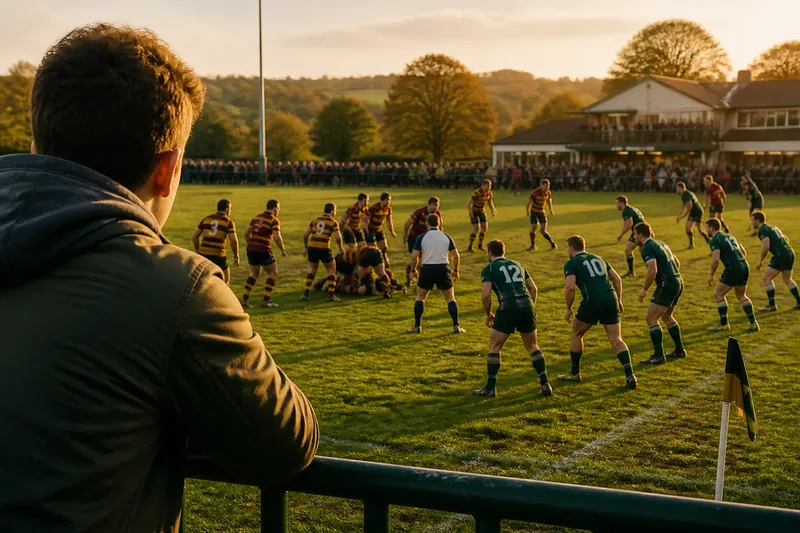
The most common mistake at a first club rugby match is watching only the player with the ball. You miss how the two teams organise themselves between carries, so the next action can seem to come from nowhere. Start with the ball, then watch how each side adjusts its shape.
Reading a club rugby match
Rugby has a rhythm of short passages called phases. A phase ends when the ball becomes available for another attacking action, often after a tackle. Instead of trying to predict a move, notice what changes from one phase to the next: which side of the pitch the attack uses, how the defence responds, and where players gather.
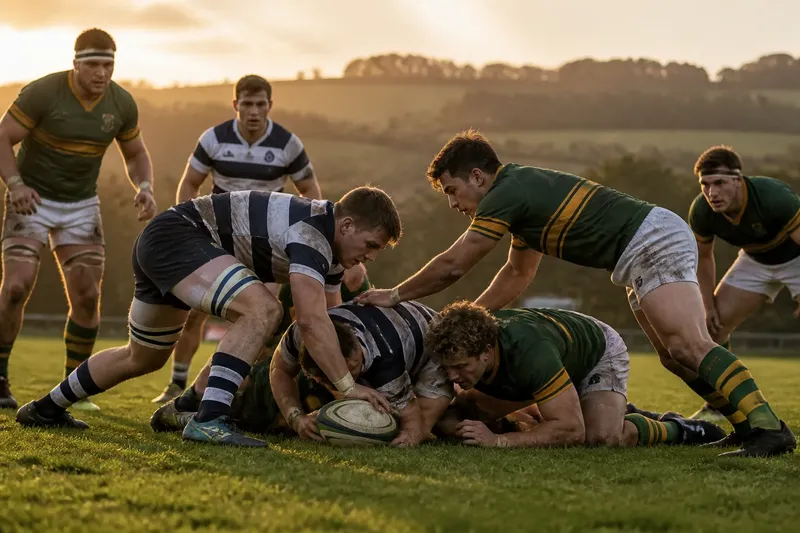
When a player is tackled, teammates arrive to contest or organise around the ball. The referee’s position can help you follow the action, while the touchline gives you a fixed edge to orient yourself. If play shifts towards a sideline, notice how both teams adjust their numbers and shape near that boundary.
What does each phase reveal?
Watch the attack’s direction across several phases. A team may keep moving towards one side, testing whether defenders can stay aligned, or shift the ball back across the field. The point is not to guess a planned pattern; look instead at the work each action requires from the defence.
Defensive spacing means how players line up and share responsibility for covering the attack. A line moving forward together can limit the carrier’s time. If one defender steps out or falls behind, neighbouring players may have to adjust their positions to cover the area left open.
After a tackle, compare the teams’ organisation. Are defenders already in a line, or are they still moving into place? Has the attack gathered close to the ball, or are players positioned farther across the pitch? Those details help explain why a team chooses to carry, pass or pause before its next action.
How do team shapes differ?
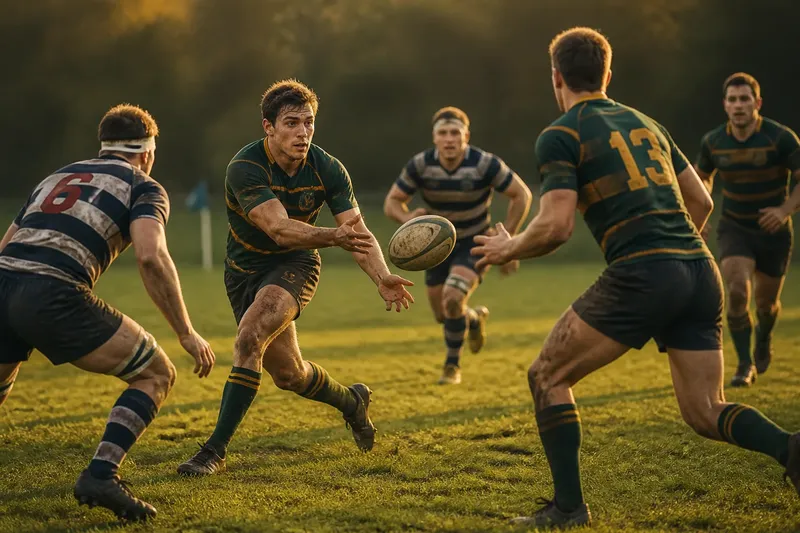
During an attack, some players stay near the ball while others hold positions farther out. During defence, players work to cover the width of the field and move together as the attack shifts. Rather than judging a shape as good or bad, observe what it makes each team do: gather, spread, turn or move sideways.
Say you are watching a club side attack near the right touchline. The attackers have gathered close to the ball, while several defenders have moved towards that side. On the next phase, the attack shifts the ball back infield; if the defenders are still turning to follow, you can see them reorganise before the next carry. The observable point is the change in alignment, not an assumption about what the attack intended.
Calls and gestures can also show organisation. A player may point or call to help teammates identify where to stand or whom to mark. Treat these as clues about coordination, not a script: the shape can still change in response to the next action.
What should I watch at a match?
What is a phase in rugby?
A phase is a passage of attack before the ball becomes available for another action, often after a tackle. Comparing the team’s shape across phases helps you follow how the match develops.
How can I read defensive spacing?
Look at how defenders align with one another and whether they move forward or sideways together. If one steps out or falls behind, watch how nearby players adjust to cover the space.
Why does the shape change after a tackle?
Players must reorganise around the ball, and defenders must adjust to the next attacking action. The positions they reach can influence where each side focuses next.
Do I need to know every position?
No. You can follow the match by noticing which team has the ball, how its players are arranged and how the opposing line responds. Learning position names can add detail later.
A simple viewing routine
Choose one team for a short passage. When it attacks, notice the direction of play and how its players are arranged; when it defends, watch how its line shifts. Change your focus when possession changes. If you lose track, find the ball and restart with the next phase rather than trying to reconstruct every pass.
- Check which team has possession; if the ball changes hands, switch your attention to the new attacking side.
- Check whether the attack is moving towards a touchline or back towards the middle; if direction changes, follow the new route rather than the previous one.
- Check whether defenders move forward together; if one player breaks the line, watch how nearby defenders adjust, or follow the ball if play has moved on.
- Check where players gather after a tackle; if most are near the ball, scan across the pitch for the rest of the formation, or stay with the ball if play restarts quickly.
- Check whether the defensive line has reset before the next action; if it is still forming, watch the reorganisation, or return to the carrier when play accelerates.
- Check whether the referee signals or moves to a new position; if the decision stops play, use that pause to reorient, or keep following the ball if play continues.
For a first club rugby match, it is enough to notice how the teams reorganise and what changes from one phase to the next. Each time you lose the thread, return to the ball, identify which side is attacking, and observe how the two shapes shift around it.