Why Rugby Has Forwards and Backs
Why rugby has forwards and backs becomes clearer when you see how set pieces shaped specialist roles and how those roles create options across the pitch.
The common mistake is to treat rugby’s forwards and backs as two fixed teams divided by size. That shortcut hides why rugby has forwards and backs: the groups reflect different demands around possession, especially at set pieces, and make it harder to see how a team connects a contest to its next attack.
Shared work, different starting points
Rugby grew from school football traditions in which players carried, ran with and contested the ball in crowded groups. Early arrangements were not the standard eight forwards and seven backs familiar from modern team sheets. Rules and customs varied, and there is no single moment when the modern division can be said to have appeared.
The useful broad account is that teams gradually found value in placing some players near the contest and others behind them. Players close to the ball could compete for possession; players further back could receive it and use open space. This is a functional explanation, not a claim that every team followed one documented path or that the groups had fixed duties from the beginning.
As scrum and lineout arrangements became central ways to restart or contest play, the close-in group had to coordinate specific tasks. That created a practical reason to practise as a unit. Players positioned behind them could organise passing and running options. The two groups took shape through these connected needs: one helped secure or contest the ball, and the other helped turn possession into territory or an attack.
Set pieces shape the groups
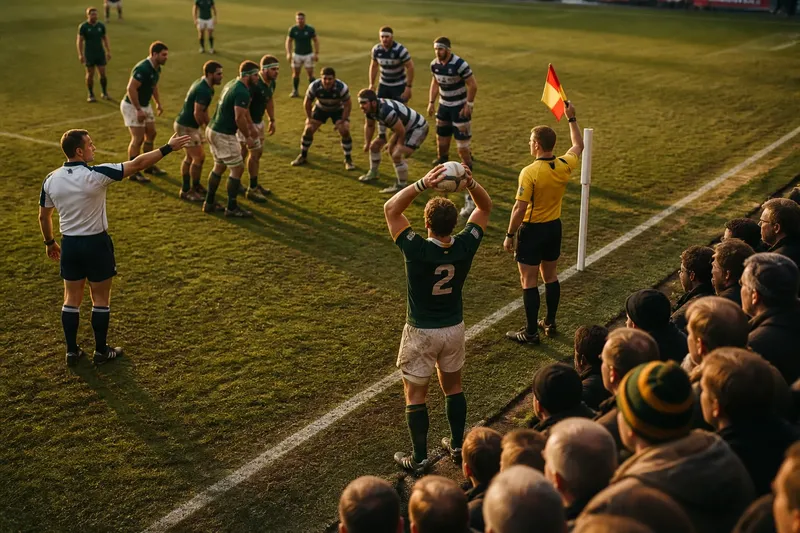
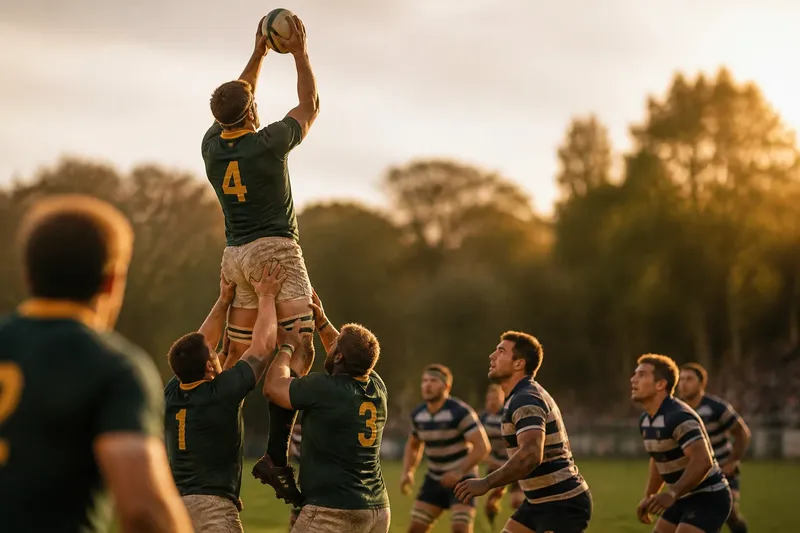
A scrum depends on players binding in a formation and pushing together. A lineout depends on a coordinated throw, lift, jump and catch. These set pieces make shared timing and defined roles useful, which is why forwards are strongly associated with them. The association describes usual responsibilities; it does not mean that only forwards can handle the ball or that all forwards do the same job.
Imagine a team has a lineout near the touchline and calls a throw to its lock. In this invented situation, the hooker throws, two forwards lift the lock, and the lock catches the ball; the forwards then bring it down under control. The expected observable result is possession secured for the team, with the scrum-half ready to pass from the resulting maul or nearby ruck. If the throw is disrupted, the ball may instead go to the opposition, so the backs’ planned attack cannot begin as intended. The example shows why lineout roles are coordinated, and why winning the set piece creates an opportunity rather than dictating what happens next.
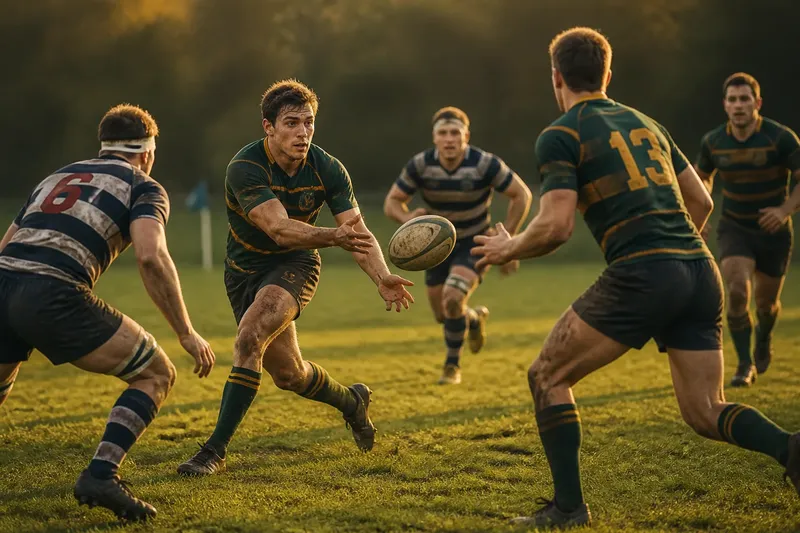
Backs usually stand behind the forwards to provide passing, running and kicking choices. The scrum-half links the contest to the next phase, while the fly-half often chooses whether to pass, run or kick. Centres and wings can offer wider attacking routes, and the full-back can join an attack or cover space behind the defensive line. Their arrangement helps a team use space, but those players also tackle and support close to the ball.
How roles connect
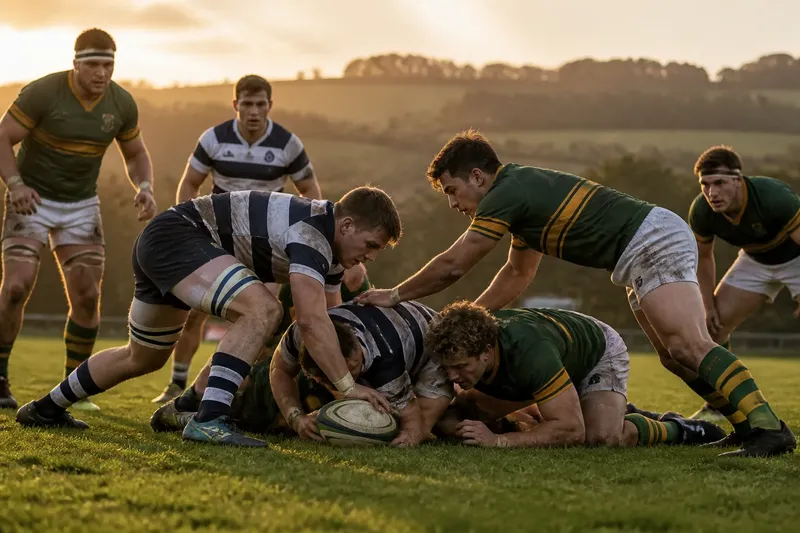
The forward-and-back division makes most sense as a handover of responsibilities. Forwards may secure possession or carry into contact; the scrum-half can move the ball away from the contest; backs can then threaten space across the pitch. If defenders close that route, a forward may carry again or the team may choose another option.
Say you are watching a team win a lineout close to the touchline. The lock catches the ball and the forwards form a maul, drawing defenders towards them. The scrum-half takes the ball from the back and passes to the fly-half; if the defence has clustered near the maul, the fly-half can send the ball to a centre and wing in the space outside. If defenders have already spread wide, the team may keep the ball close instead. The observable difference is where the next pass or carry goes, not a guaranteed result: the structure offers choices, while the defence and execution shape the outcome.
That is also why the groups are not divided into physical labour and skill. Forwards pass, run and make decisions; backs join breakdowns, tackle and defend close to the line. A position describes a player’s usual starting responsibilities, not a boundary on what they may do during open play.
What should you watch?
Why are forwards usually near the ball?
Scrums, lineouts and many close contests require coordinated roles, so forwards often gather around possession. Watch whether they secure the ball, carry it or create space for the next player.
Why do backs stand further out?
Their positions give the team passing and running options across more of the pitch. Look for how the ball moves from the scrum-half and fly-half towards centres, wings or the full-back.
Do forwards and backs have separate jobs?
No. The names describe usual responsibilities, not exclusive tasks. Forwards can distribute the ball, and backs can tackle or help secure possession at a close contest.
Did the groups appear all at once?
There is no single origin point needed to explain the modern arrangement. Broadly, the roles became more specialised as teams organised around set pieces and developed ways to move the ball from close contests into space.
To understand why rugby has forwards and backs, follow what each group contributes to the next phase rather than judging players by size or where they start. The positions give a team a workable way to organise contests and attacking options, while the movement of the ball shows where those responsibilities meet.