How Rugby Touchline Rules Decide the Restart
Rugby touchline rules are easier to follow when you track how the ball went out; learn to distinguish a quick throw, lineout and other restart.
The common mistake with rugby touchline rules is to assume that every ball crossing the boundary leads to a lineout. That can make a match harder to follow: the ball may be out, but the restart depends on how it got there. Track the ball’s path, the player who carried or kicked it, and the referee’s signal.
Touchline basics
The touchline marks the side boundary of the field. A ball is in touch when it or the player carrying it touches the line or the ground beyond it. A ball can also be in touch while still in the air beyond the line. The assistant referee’s flag and the referee’s signals help identify the decision.
Do not judge the call from a boot that looks close to the paint alone. The ball’s position matters too, and a player can reach back from the field to play a ball that is in touch, subject to the laws governing the situation.
Restarts after touch
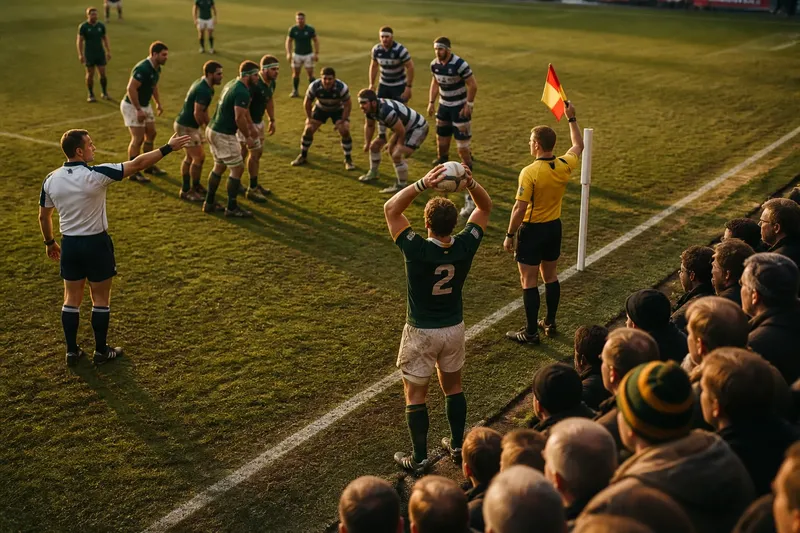
A lineout is a structured contest: players from each side form lines, and the team awarded the throw sends the ball between them. A quick throw is different. It can be taken before a lineout forms, but only when the current laws’ conditions are met.
For a quick throw, the player must use the ball that went out and throw it from the place where it crossed the touchline or behind that point towards their own goal line. The ball must be thrown in the required direction and manner. A quick throw is unavailable if another person has touched the ball after it went out or if a lineout has formed. These details are technical and can depend on the current law, so check the latest World Rugby Laws for a disputed decision.
Say the ball crosses the touchline and a defender retrieves it before anyone else touches it. If no lineout has formed, the defender may be able to take a quick throw from a permitted place, provided the throw meets the law. If a spectator, player or other person touches the ball first, the quick-throw option is no longer available; the referee will apply the appropriate restart law.
How did the ball go out?
The last touch is useful evidence, but it does not settle every touchline decision. A kick that goes directly into touch can have a different result from one that first lands in the field. The phase of play and the place from which the kick was made may also affect the restart and the lineout’s location.
“Directly into touch” means the ball goes out without first landing in the field of play or being touched there in a way that changes the ruling. If it bounces in the field before crossing the line, it has not gone directly out. A ball landing beyond the boundary is not, by itself, enough to tell you where the lineout will be.
A carrier taken over the boundary presents a different sequence from a kick sent out. The referee considers how the ball entered touch and applies the relevant law, rather than relying on the last visible hand. Watch for a kick, a bounce, and the carrier’s position; then check the referee’s signal and the restart.
Where is the lineout?
The ball’s final landing spot does not always set the lineout’s position. If a kick goes directly into touch, the lineout may be located where the kick was taken, depending on the type of kick and the circumstances. If the ball first lands in the field, the crossing point is generally the more relevant clue. The exact location is governed by the current law, including rules for restarts and other kicks.
Imagine a player kicks from open play and the ball crosses the touchline without first bouncing in the field. The ball lands beyond the boundary farther upfield. Do not assume the lineout will be at that landing spot: the referee applies the rules for a direct kick, including where it was taken. If the ball instead bounces in the field before going out, that changes the relevant clue, and the crossing point is generally used. The referee’s mark confirms the location.
Who takes the throw?
The team awarded the lineout chooses its thrower. Many sides use a hooker, but the role is not reserved for that position. A coach may select another player, and the thrower must follow the laws on where and how the ball is delivered.
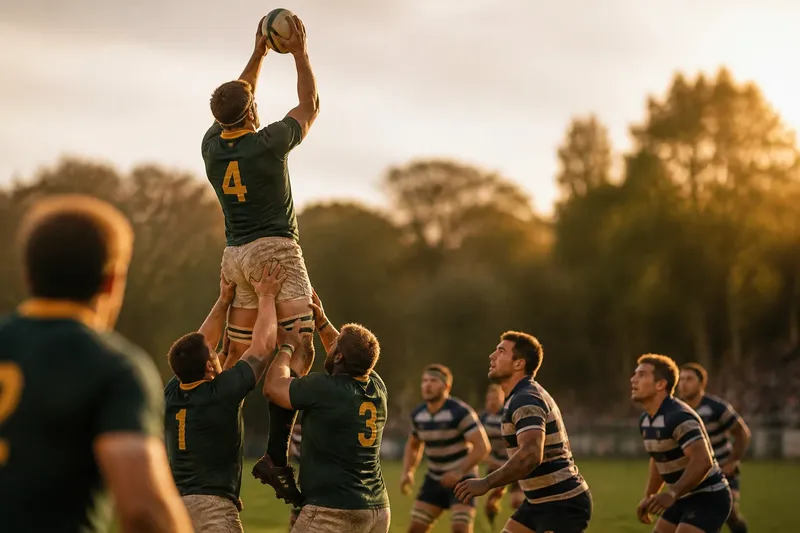
The thrower is not the only person to watch. The teams choose their lineout numbers within the rules, and players may lift or support a jumper only as the laws permit. A lineout is a live contest, even when the team’s calls make its plan look rehearsed.
Reading touchline decisions?
Can a quick throw replace a lineout?
Sometimes, if the original ball is available, nobody has touched it after it went out, no lineout has formed, and the throw meets the current law. If any condition is missing, the quick throw is not available.
Does the last player to touch the ball decide who throws?
Not by itself. The referee considers whether the ball was kicked out, whether it bounced in the field, and the circumstances of the kick or carrier crossing the boundary.
Why can a lineout be away from where the ball landed?
The lineout’s location depends on how the ball entered touch and the type and origin of a kick, not just where the ball came to rest. The referee’s mark shows the position applied under the relevant law.
Is every touchline restart a lineout?
No. A quick throw may be available before a lineout forms, and some stoppages near the boundary lead to a different restart. Watch the referee’s signal and the teams’ formation to identify what follows.
Checks for spectators
- Observe whether the ball or its carrier touches the line or ground beyond it; if so, treat the ball as in touch, otherwise keep watching for the next boundary event.
- Observe whether a kick went straight out or bounced in the field; if it went straight out, wait for the referee’s ruling on the applicable kick law, otherwise use the crossing point as the main location clue.
- Observe whether the ball was touched by anyone after it went out; if so, do not expect a quick throw, otherwise check whether the other quick-throw conditions are met.
- Observe whether a lineout has already formed; if it has, the quick-throw option is closed, otherwise watch whether a lawful quick throw is attempted.
- Observe the referee’s mark for the lineout; if it is away from the landing spot, consider whether the ball went directly out and where the kick began, otherwise expect the crossing point to help explain the location.
- Observe the referee’s signal and the players’ formation; if two lines form, expect a lineout, otherwise wait for the signal to identify a quick throw, scrum, penalty or other restart.
When a call is unclear, trace the sequence rather than guessing from the ball’s final position: note whether a player or the ball crossed, whether a kick bounced, and whether a lineout formed. Rugby touchline rules become easier to follow with those clues, while a disputed technical ruling is best checked against the current World Rugby Laws or the competition’s official guidance.